Owensville Area Ambulance District is asking our community to support an additional half-cent sales tax/use tax to help us do what we do best: take care of you and your family in your time of need. Spreading the cost to everyone that shops in Owensville is a more equitable way for everyone to share the cost not just the homeowners of the district. If the ballot issue passes, the property owners will get a break with the elimination of their property tax (ambulance district), and the district will be able to continue providing excellent care for our residents and visitors.
Why should I vote for Proposition Owensville Ambulance?
Some people never think about their local ambulance district until a loved one needs an ambulance. In those terrifying moments of an emergency, there is nothing more important than the ambulance with Paramedics/EMTs arriving quickly and providing professional, compassionate care. Providing emergency medical care for our community is what we do, and we need your help to continue our mission.

You will eliminate your ambulance district property tax bill.
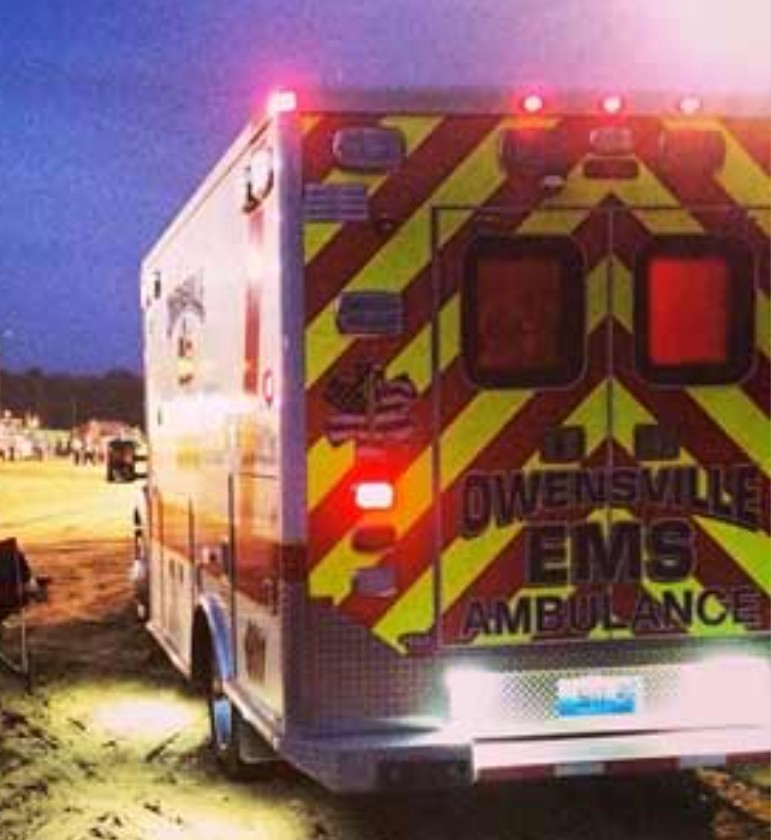
Visitors to our community will share in the cost of ambulance services they may use. (Fair Share Tax)
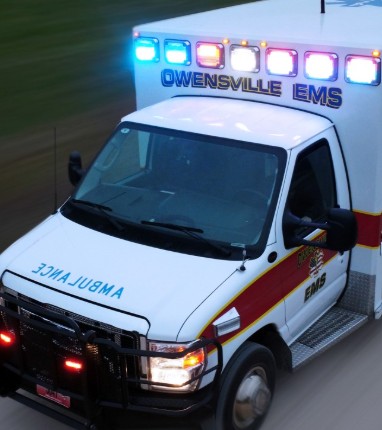
You will enable us to maintain our high-quality care and embrace new needs for our community.
How is the additional funding going to be used?
The additional funding will just allow us to keep up with the rising cost of labor (minimum wage increase), building and ambulance maintenance, insurance, medical supplies, and equipment for the next 20 years. There are a few areas that we would like to improve on going forward.
Keep Paramedics on Staff
The need for paramedics in rural settings is vitally important, given the types of patients we see every day. Paramedics can make the true difference between life and death during a 45- 60-minute drive to the hospital for someone having a heart attack, breathing problems, or a diabetic emergency.
More Availability of Crews
Reduced dependence on outside districts by providing an additional crew during our busiest periods. We want you to see our familiar faces whenever possible when you call 911. We know you best, and we want to be there when you need us the most.
A Little Extra Help
We would like to start a Community Paramedic Program to provide additional home medical services that we do not currently offer. Extra services may include home visits to assist with medication, help schedule an appointment, pick up groceries, or provide transportation to a local doctor’s appointment. There is a significant need in our community, and we want to be part of fulfilling it.
A Little Background
When was the last time Owensville Area Ambulance District asked for additional funding?
We asked our district’s citizens for additional funding almost 20 years ago (2007).
We requested that they approve a half-cent sales tax, which, in turn, reduced property taxes by half of the amount collected in sales tax. It was approved, and it has helped the district tremendously, bringing us to where we are now.
What is the difference between use tax and sales tax?
They are virtually the same. The sales tax is what you pay when you go to our local Wal-Mart and buy a set of bed sheets for your bed. Use tax is when you order the bed sheets online (Amazon).
The County and Gasconade Central 911 have collected use tax on online sales for several years, but this has not been an available funding source for ambulance districts until last year, when it was passed by the Missouri legislature.
What is the wording on the ballot, and what does it mean?
Proposition Owensville Ambulance
Shall the Owensville Area Ambulance District be authorized to increase the existing sales tax by an additional one- half percent, bringing the total sales tax to one percent, for the purpose of providing revenues for the operation of the Owensville Area Ambulance District, and be further authorized to impose a use tax in an amount equal to such sales tax, provided that if the sales tax is reduced or raised by voter approval, the local use tax rate shall also be reduced or raised by the same action?
The ballot language says that we are asking for an additional one-half cent of sales tax as well as the same amount of use tax… total of one percent. As with any funding proposition, the voters can authorize this tax, and they can take it away, as the remainder of the questions state. (directly from Missouri revised statutes)
What is the difference between an EMT (Emergency Medical Technician) and a Paramedic?
EMT
An EMT is the basic level in emergency medical provider. All providers start as EMTs and progress to different levels as they desire. EMTs can provide most basic care needed in most calls, including assessment, airway procedures, administering oxygen, using an AED, splinting, etc.
Paramedic
A Paramedic is an EMT with advanced education. A paramedic can read an EKG, including a 12-lead EKG, start an IV and give fluids, administer pain medication, and give numerous other medications a patient may require in an emergency. A paramedic can slow a heart that is beating too fast or speed up a heart that is beating too slow. They have advanced protocols and skill sets to perform a variety of life-saving procedures.
How expensive is the medical equipment that EMTs and Paramedics use?
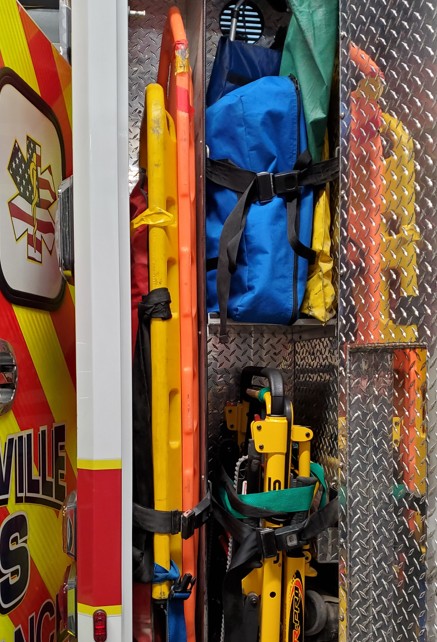
Using two of our most used pieces of equipment as examples. Our EKG monitor and our stretchers (including the power loader). We have received grant money (COVID) over the past couple of years to help pay for equipping our ambulances with both items, but, as with anything medical, they have a lifespan.
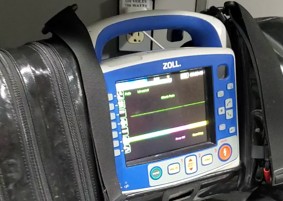
The EKG monitor we use does a variety of things for the EMT/Paramedic, including measuring vital signs such as Blood Pressure, Pulse Rate, breathing rate, oxygen saturation, and CO 2 levels. It also records EKG rhythms, including 12-lead rhythms, which can be faxed to the hospital from a cell phone so a cardiologist can see them directly. The monitor can also use the pacer to increase a patient’s heart rate, deliver a small shock (cardioversion) to slow the heart rate, or deliver defibrillation to restart the heart. This piece of equipment is used on every call and is a vital part of our day-to-day operations.
A new Zoll (Zenix) monitor costs $57,235.65. Along with the initial cost, there are the future costs of batteries for the unit ($1,040 each) and mandated preventive maintenance ($2,216.25 per year per unit). (estimated lifespan 6-8 years)
The stretcher is the second item that we use on every single call. They have become much safer and back-friendly over the last 15 years, which, of course, is reflected in the cost. The stretcher, in combination with a power loader system, provides a safe and efficient way to load and unload the patient into the ambulance. A new stretcher and loading system will cost over $71,000.
Preventive maintenance will cost about $ 3,500 per unit/pair per year. (estimated life span 8-10 years)
How expensive is an ambulance?
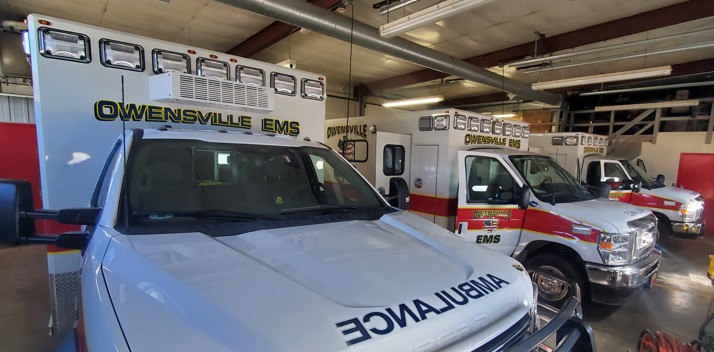
While this varies depending on the type and features requested, according to Osage Industries in Linn, Missouri, the average price of a new ambulance on an E 450 chassis is approximately $160,000 to $170,000. A four-wheel drive ambulance on a F550 chassis costs about $220,000 to $230,000 in 2026.
Like anyone who has bought a new car in recent years, the price of ambulances goes up every year. We generally keep our ambulances for 8-10 years, depending on mileage and service issues with the chassis. The ambulance cost does not include any equipment used in each ambulance.
To save money over the past several years, we have done what is called a re-mount: they remove the box from the chassis, place it on a different chassis, and update all the electrical and other pertinent items on the ambulance. This saves about 30-35% of the cost of a new ambulance. However, this can only be done a limited number of times.
Why can’t the ambulance district charge more money to people who use the ambulance?
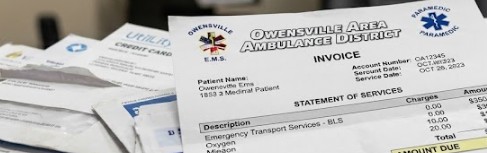
If it were only that simple. If you have ever had a medical procedure done or even gone to the doctor’s office, your insurance company (Anthem, Medicare, Medicaid, etc.) will send you a copy of what they paid for your claim. It will have several different numbers on it. First, it will list what the provider charged, then what insurance will allow, what they paid to the provider (based on their formula), and what you owe. Each procedure, each drug, each visit has an amount the insurance company will pay (the allowable amount)… the rest is just written off by the provider. With Medicare, there is an allowed amount for the charge; they will pay 80% of that, and you or your supplement will pay the other 20%. If the district charges $1,000 or $5,000, we will collect only the allowed amount from Medicare and possibly the 20% from you or your secondary insurance. Medicaid and Private insurance are basically the same. Most of our billing rates are closely related to Medicare allowable amounts.